How Garage Door Accessories Can Transform Your Garage


Most homeowners think about the garage door itself when something breaks, gets noisy, or starts looking dated. They replace springs, repaint panels, or finally swap out an aging opener. What often gets overlooked is the layer that sits between a basic garage and a truly useful one: the accessories.
That word can sound minor, almost decorative, but in practice, garage door accessories can change how the entire space feels and functions. I have seen garages go from cold, dim, inconvenient storage zones to secure, efficient extensions of the home with a handful of smart upgrades. Not every add-on is worth buying, and not every garage needs the same setup. Still, when the right accessories are matched to the way a household actually uses the space, the difference is immediate.
For some families, the transformation is about safety. For others, it is convenience at 6:30 on a rainy morning when everyone is trying to leave at once. Sometimes it is resale value, curb appeal, or simply ending a long-running annoyance, like poor lighting or a door that closes with more drama than necessary.
The real value of accessories is that they let you tailor the garage to daily life rather than forcing daily life to work around a bare-bones system.
A garage is rarely just a place for parking
In many homes, the garage has become one of the hardest-working areas on the property. It may still shelter a vehicle, but it also stores tools, bikes, seasonal bins, sports gear, lawn equipment, and overflow pantry items. In some households, it doubles as a workshop, home gym, hobby room, or entry point used more often than the front door.
That matters because the expectations placed on the garage have changed. A door that simply opens and closes is no longer enough in many cases. People want better visibility, smoother access, improved control from their phones, quieter operation near living spaces, and stronger security when valuable equipment is stored inside.
I once visited a home where the owners were convinced they needed a whole new garage door system. The complaints sounded familiar: poor lighting, difficulty getting in when the keypad acted up, concern about package theft, and frustration with a loud opener waking a child whose bedroom sat above the garage. After a proper look, the door itself was still in decent shape. What changed that garage was not a full replacement. It was a bundle of targeted upgrades, a Garage Door Accessories quieter belt-drive opener, brighter LED light modules, a new wireless keypad, a camera-equipped control system, and fresh weather sealing. The cost was far lower than a complete overhaul, and the improvement in day-to-day use was dramatic.
That is the quiet strength of good accessories. They solve the specific problem instead of replacing everything around it.
The accessories that make the biggest difference
Not all garage door accessories carry the same weight. Some are nice to have. Others noticeably change the way the garage works from the first day.
Here are the ones that tend to deliver the clearest return in real homes:
- Smart openers and app-based controls that let you monitor, open, and close the door remotely.
- Wireless keypads and upgraded remotes that simplify entry for families, guests, or service providers.
- Safety accessories, including motion-detecting lights, photo-eye sensors, and battery backup systems.
- Weather seals and threshold kits that block drafts, water, dust, and pests.
- Interior lighting and camera integrations that improve visibility and security.
Each of these does something different, but together they turn a garage from a mechanical utility area into a better-managed part of the home.
Convenience is not a luxury when you use the space every day
Convenience features are easy to dismiss until you live with them. A wireless keypad, for example, sounds simple. In practice, it solves a surprising number of household friction points. Children can get into the garage after school without carrying a remote. Walkers, runners, or cyclists can leave the house without keys. Contractors or pet sitters can be given temporary access without handing over a garage remote that might never come back.
Modern remotes and wall controls have improved as well. Better range, more reliable signal performance, and multi-door compatibility matter in larger homes or detached garages. If someone has ever sat in the driveway pressing the remote repeatedly while muttering at the visor, they already understand the value of a better transmitter.
Smart controls go further. Being able to check whether the garage door is closed from your phone is one of those features people underestimate before they have it. I hear the same comment over and over after installation: “I did not realize how often I worried about that.” It is especially useful for households with teenagers, frequent deliveries, or irregular schedules. Some systems send alerts when the door has been left open past a set time. Others allow scheduled closing or temporary digital access for specific users.
There is a practical side to this beyond convenience. A garage door left open for hours can mean heat loss, security risk, rain exposure, or easy access to stored tools and bikes. One alert on a phone can prevent all of that.
Security accessories deserve more attention than they get
A garage is often one of the weakest points in a home’s security routine, partly because people get comfortable with it. They lock the front door carefully, then leave the garage side entry sloppy or assume the overhead door is enough protection on its own.
Garage door accessories can shore up those weak spots. Motion-triggered exterior lighting is one of the simplest and most effective improvements. It helps arriving homeowners see clearly and makes unwanted activity more visible from the street or neighboring properties. Integrated cameras are another strong option, especially when they are tied directly to the garage opener app. Seeing whether a delivery was placed inside, whether the door actually closed, or who entered at a given time adds a layer of confidence that older systems never offered.
Rolling code remotes are important too. Older fixed-code systems can be more vulnerable than many people realize. Newer remotes and openers use technology that changes the access code with each use, which reduces the chance of code capture and replay. That may sound technical, but the benefit is straightforward: it is harder for someone else to impersonate your remote.
Battery backup is often discussed as a convenience feature, but it is also a security feature. During a power outage, you do not want the garage becoming inaccessible or awkward to operate, particularly if it is the main entry point for the household. In areas with frequent storms or unreliable service, battery backup is not a gimmick. It is one of the smartest accessories you can add.
Comfort matters more than people expect
A garage does not need central air and finished drywall to feel better. A few modest accessories can make the space cleaner, drier, brighter, and easier to use year-round.
Weather sealing is a perfect example. Bottom seals, perimeter seals, and threshold barriers can dramatically reduce water intrusion, wind-blown dust, leaves, and insect entry. They also help moderate temperature swings. No, they will not fully insulate an unconditioned garage in the middle of winter or summer, but they can noticeably improve the environment, particularly in garages with gaps large enough to see daylight.
I have seen garages where the owners thought the floor was sloped wrong because water kept showing up near the back wall after storms. The issue turned out to be a worn bottom seal and side gaps that let water blow in under pressure. Once those were corrected, the problem nearly disappeared. It is hard to appreciate the impact of proper sealing until you no longer need to sweep out soggy debris after every heavy rain.
Lighting is another underestimated upgrade. Many garages still rely on a single central bulb, which leaves corners dim and makes shelves, tools, and steps harder to see. Accessory lighting systems, whether integrated with the opener or added as separate smart fixtures, can make the whole room more functional. Better light improves safety, reduces frustration, and makes a garage feel less like an afterthought.
If the garage shares a wall or ceiling with bedrooms or living spaces, noise-reduction accessories can have a surprisingly strong effect on comfort. Nylon rollers, belt-drive opener systems, and vibration-isolating mounting hardware can reduce rattling and mechanical noise significantly. The difference is not subtle when replacing old metal rollers and a noisy chain-drive unit.
The right accessories depend on how the garage is actually used
One mistake I see often is buying accessories based on marketing rather than routine. A homeowner sees a long list of features and assumes more is always better. In reality, the best setup is the one that matches the habits of the household.
A family with three drivers and a garage that serves as the main entrance may benefit most from multiple remotes, a dependable keypad, app control, and bright entry lighting. A hobbyist using the garage as a workshop may care more about insulation seals, task lighting, and quiet door operation. Someone storing expensive bikes, tools, or outdoor gear may prioritize cameras, motion alerts, and stronger locking features.
Detached garages create another set of priorities. Because they sit farther from the house, they often need better lighting, stronger connectivity for smart features, and more deliberate security planning. If the space is used at night, remote visibility and dependable access become more important.
Climate matters too. In snowy regions, bottom seals, threshold kits, and corrosion-resistant hardware tend to pay off. In dry, dusty areas, sealing and filtration around the garage perimeter can reduce how much grime enters the space. In humid climates, keeping water out and air moving becomes a bigger concern.
This is where judgment matters more than a shopping list. A $40 accessory that solves the right problem is more valuable than a $300 add-on that never gets used.
Installation quality often determines whether an accessory feels worthwhile
Garage door accessories have a way of looking deceptively simple in product listings. A keypad seems like a quick install. Weather sealing appears straightforward. Even smart opener add-ons can look easy enough to handle in an hour. Sometimes they are. Sometimes they are not.
The challenge is not always attaching the accessory. It is making it work reliably with the existing system. Older openers may have compatibility issues. Uneven concrete can make threshold seals fail if they are installed without proper surface prep. Misaligned sensors can create intermittent closing problems that leave homeowners more frustrated than before. Camera and smart control features depend on stable power, adequate Wi-Fi coverage, and correct app setup.
That does not mean every accessory requires a professional, but it does mean the garage should be assessed as a system rather than a collection of parts. An upgraded remote will not fix poor signal transmission caused by failing receiver hardware. A new seal will not fully compensate for a door that is out of alignment. Better lights are helpful, but they do not replace the need for functioning safety sensors.
A thoughtful installer or experienced homeowner looks at the whole picture. Is the track aligned? Are the springs balanced? Is the opener still in good operating condition? Do the accessories complement the door instead of exposing other weaknesses?
When those questions are handled upfront, accessories feel like upgrades. When they are ignored, accessories can feel like expensive clutter.
Small details can change the way a garage looks from the street
Not every transformation is mechanical. Some garage door accessories improve appearance in ways that have a direct effect on curb appeal.
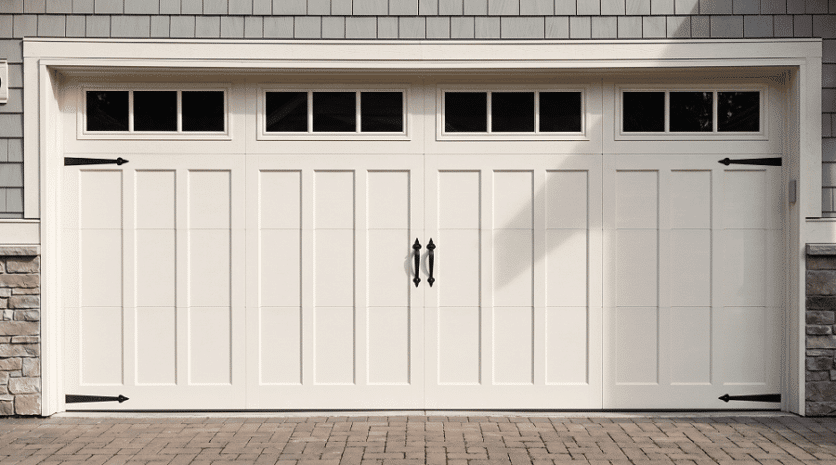
Decorative hardware is a good example. Handles, hinge-style accents, and trim elements can give a plain door more character, particularly on carriage-style or traditional homes. Window inserts can also change the appearance of the door while bringing natural light into the garage. The catch is that these upgrades need to suit the architecture of the home. Decorative black hardware on the wrong door can look forced. The right pairing, though, can make a standard builder-grade garage door look far more intentional.
Exterior lighting around the garage is another visual upgrade with practical value. It frames the garage, improves nighttime visibility, and makes the front elevation of the home look more finished. This is especially helpful because the garage often takes up a large percentage of the facade on newer homes. If it looks neglected, the whole property can feel less cared for.
There is also a cleanliness effect that is hard to quantify but easy to notice. When weather stripping fits properly, hardware is not rusting, and accessories look coordinated rather than patched together over time, the garage simply feels more maintained. Buyers notice that. So do appraisers and visiting family members, even if they cannot immediately explain why the space looks better.
Knowing what is worth the money
Budget always matters, and the best value does not always come from the flashiest accessory. Some of the most worthwhile improvements are modestly priced and solve persistent problems.
If I had to prioritize for an average homeowner, I would start with safety and reliability first, then access control, then environmental comfort, then appearance. That order tends to hold up well because a garage door is a large moving object, often used multiple times a day. It should be safe, predictable, and easy to control before it is stylish.
A sensible decision process usually looks like this:
- Fix any underlying door or opener issues before adding accessories.
- Upgrade safety and security features where the current system is weak or outdated.
- Add convenience features that support the household’s real habits.
- Improve sealing, lighting, and noise control if the space is uncomfortable or messy.
- Finish with cosmetic accessories if curb appeal matters to you.
That sequence helps prevent wasted spending. There is little point adding a smart control package to a failing opener, or decorative hardware to a door with cracked panels and poor balance.
Common missteps homeowners regret
One of the most common regrets is buying accessories in isolation. Someone upgrades the opener without checking whether the door itself is too heavy or poorly balanced. Someone adds a threshold seal before addressing standing water outside the garage. Someone installs a camera but never improves lighting, leaving footage too dark to be useful.
Another issue is overcomplication. A garage used by one driver with predictable hours may not need a complex smart ecosystem, multiple app permissions, and layered automation rules. More features mean more setup, more maintenance, and more chances for confusion. The best accessory package is not the one with the longest feature sheet. It is the one people actually use with confidence.
Aesthetics can also go sideways. Mixing finishes, over-accessorizing the door face, or choosing decorative elements that do not fit the home can make the garage look busier rather than better. Restraint usually wins here.
Then there is the temptation to ignore maintenance after the accessories are installed. Keypads need fresh batteries. Seals wear out. Sensor lenses get dirty. Apps need occasional updates. Even the best accessories perform poorly when neglected.
When accessories can postpone a full replacement, and when they cannot
Accessories can breathe new life into an aging setup, but they are not magic. If the door has structural damage, severe corrosion, failing sections, or chronic balance issues, you may be better served by replacement. The same goes for an opener that has become unreliable, unsafe, or incompatible with the controls and safety features you want.
That said, there is a wide middle ground where accessories make excellent sense. A sound but basic door can become quieter, safer, and far more convenient with the right additions. This is often the sweet spot for homeowners who want meaningful improvement without committing to a full door and opener overhaul.
I often advise people to think in terms of usable life. If the core door system is still strong and likely to remain serviceable for years, accessories can extend its value and improve daily performance. If the system is already near the end, accessory spending should be cautious and strategic.
The transformation is usually practical before it is dramatic
People tend to imagine “transforming” a garage as a major remodel. Fresh epoxy floors, cabinets, slat walls, and custom storage certainly have their place. But with garage door accessories, the transformation is often quieter and more practical than dramatic.
It is the moment the door closes softly instead of rattling the kitchen cabinets. It is the relief of checking your phone and seeing the garage is secure. It is the dry floor after a storm. It is a keypad that works every time, lights that come on when you need them, and a garage that no longer feels like the least cared-for part of the house.
That is why these upgrades matter. They improve one of the most frequently used, least glamorous spaces on the property. And because the garage sits at the intersection of access, storage, security, and daily routine, even small improvements tend to have an outsized effect.
The best garage door accessories do not call attention to themselves. They simply make the garage work the way it should have all along.
Select Garage Doors
11479 Pine Dr, Parker, CO 80134, United States
+1 303-228-0018
FAQ About Garage Door Accessories
What are garage door parts called?
Common door components include panels, hinges, rollers, tracks, springs, cables, and weather seals. The opener is a separate operating system, with accessories such as remotes, keypads, and compatible smart controls. Identify the door and opener model before choosing a part; springs, cables, and other loaded components should be assessed and serviced by a trained garage door technician.
What garage door supplies do I need?
The right supplies depend on the problem or upgrade you want to address. Common accessories include replacement remotes, wireless keypads, weather seals, decorative handles and hinges, and compatible smart controls. Check model compatibility and the manufacturer's instructions before buying. A technician can inspect the system and recommend suitable accessories without replacing otherwise serviceable equipment.
Where can I find garage door accessories in Parker?
Select Garage Doors supplies and installs garage door accessories for Parker homeowners. Contact the company with your opener brand and model, door details, and the upgrade you want so it can confirm compatibility, availability, pricing, and installation requirements. Confirm collection or appointment arrangements before visiting.